Most guides frame Perplexity vs ChatGPT as a competition. They are not competing. They were built to solve different problems, and once you understand the difference, the choice becomes obvious for most workflows. Perplexity is an answer engine. It searches the web in real time, cites every source with a clickable link, and gives you verifiable, traceable information. It was built from the ground up with one purpose: to give people accurate, sourced answers fast.
ChatGPT is a creation and reasoning engine. It writes, codes, generates images, has voice conversations, analyzes documents, and maintains context across long, multi-step projects. It was built to do almost everything, and largely succeeds. Both charge $20 per month for their Pro/Plus tiers. Both have free tiers. The question is not which one is better. The question is which one belongs in your workflow, and for most professionals, the answer is both, used for different tasks.
This guide shows you exactly when to use each, with verified data, real task tests, and a profession-by-profession breakdown. And part of our complete AI Tool Comparison Guide 2026.
Is Perplexity better than ChatGPT?
Use Perplexity when you need verified, current, sourced information: research, fact-checking, news, live data, market analysis. Use ChatGPT when you need to create, reason, or build: writing, coding, images, voice, document analysis, complex multi-step projects. For most professionals, the smartest workflow in 2026 is Perplexity for the research phase and ChatGPT for the creation phase. At $20/month each, the combined $40 investment covers both halves of most knowledge work.
What is Perplexity AI? Review 2026
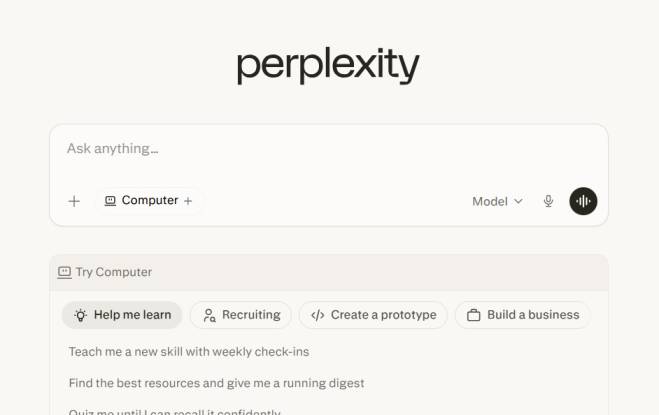
Perplexity AI launched in 2022 with a clear mission: replace the traditional search engine for people who want direct, sourced answers rather than a list of links. By 2026, it will have grown to 100 million monthly users and is the most popular AI-native research tool in the world. Every response cites clickable sources. The Pro version lets you switch between underlying models, including GPT-5.4, Claude, and Perplexity’s own Sonar models, giving you access to multiple AI engines through one interface. It is not a chatbot. It is a research assistant.
What is ChatGPT in 2026
ChatGPT is OpenAI’s flagship AI platform, running on GPT-5.4 as of April 2026. It has 900 million weekly active users and is the most-used AI tool on the planet. In 2026, it is far beyond its chatbot origins: image generation via DALL-E, Advanced Voice Mode for spoken conversations, Canvas for collaborative document and code editing, Deep Research mode that runs for 5-30 minutes across hundreds of sources, Python code execution, file upload and analysis, and over 500 third-party integrations. It is the closest thing to a complete AI productivity platform available to individuals.
How Is Perplexity Different from ChatGPT?
| Dimension | Perplexity | ChatGPT |
| Primary purpose | Find and verify information | Create and reason |
| Built around | Real-time web search | Language model generation |
| Every response includes | Clickable source citations | Generated text (no auto citations) |
| Best question type | “What is the current X?” | “Help me do X” or “Create X” |
| Hallucination risk | Lower on factual queries | Higher without web search |
| Context retention | Short, more transactional | Long, maintains full conversation |
| Ideal session length | Short (1-3 exchanges) | Long (multi-step projects) |
The simplest way to remember how Perplexity is different from ChatGPT: Perplexity answers “what is happening.” ChatGPT helps you do something with that information.
Perplexity vs ChatGPT Benchmark Comparison 2026
| Benchmark | ChatGPT | Perplexity | Winner |
| Search accuracy (factual queries) | 87% | 92% | Perplexity |
| Citation accuracy | Not automatic | Every response | Perplexity |
| GPQA Diamond (PhD science) | 92.0% | N/A (search-based) | ChatGPT |
| SWE-bench (coding) | 74.9% | N/A | ChatGPT |
| Real-time information | With web search | Always on | Perplexity |
| Response speed | ~900 tokens/sec | Faster for search queries | Perplexity |
| Context window | 1M tokens | 32K tokens | ChatGPT |
| Deep Research quality | Strong (o3 powered) | Strong (multi-source) | Tied |
| Hallucination on facts | Moderate | Lower | Perplexity |
| Hallucination on reasoning | Lower | Higher | ChatGPT |
What the benchmarks mean: Perplexity’s 92% factual accuracy versus ChatGPT’s 87% matters specifically for research tasks where you need to trust the output without manually verifying it. ChatGPT’s massive context window and reasoning benchmarks matter for complex analysis projects. The tools benchmark well across categories because they were optimized for different tasks.
Perplexity vs ChatGPT Pricing Comparison 2026
| Plan | ChatGPT | Perplexity | Better value |
| Free | GPT-4o mini, moderate limits | Sonar model, 5 Pro searches/day | Tied, different purposes |
| Entry | $8/mo (ChatGPT Go) | Not available | ChatGPT |
| Standard | $20/mo (Plus) | $17/mo (Pro) | Depends on use case |
| Power | $200/mo (Pro) | $271/mo (Max) | Perplexity |
| Team | $25/user/mo | $34/mo | ChatGPT |
| Enterprise | Custom + BAA | Custom | ChatGPT (compliance) |
| Annual discount | ~17% off | ~17% off | Tied |
| Student discount | None | Available | Perplexity |
At $20/month, both tools are identically priced at the standard tier. What you get is completely different. ChatGPT Plus gives you the full GPT-5.4 model plus image generation, voice, canvas, and code execution. Perplexity Pro gives you unlimited sourced research queries, model switching (access GPT-5.4, Claude, and Grok through Perplexity’s interface), and 20 deep research reports per day. For researchers and academics, Perplexity’s student discount makes it meaningfully cheaper.
Perplexity Pro Model Switching: Access Multiple AI Engines in One Interface
Perplexity Pro does not limit you to a single AI model. This model-switching feature is a hidden advantage that works directly in your favor when you compare Perplexity vs ChatGPT vs Claude, or Perplexity vs ChatGPT vs Grok.

| Model available in Perplexity Pro | Best for |
| Perplexity Sonar Pro | Fast research queries |
| GPT-5.4 (OpenAI) | Complex reasoning with sources |
| Claude 3.7 (Anthropic) | Long-form synthesis |
| Grok (xAI) | Real-time X/Twitter data queries |
This setup means Perplexity Pro at $20/month gives you search-grounded access to multiple frontier models. You choose which AI brain processes your research query, and every answer still comes with automatic citations. That is a capability ChatGPT’s single-model approach does not replicate.
Perplexity vs ChatGPT Free Tier Comparison: Daily Limits
| Feature | ChatGPT Free | Perplexity Free |
| Model | GPT-4o mini | Sonar (Perplexity’s own) |
| Daily message limit | Moderate (hits during heavy use) | Unlimited standard searches |
| Pro/advanced searches | None | Limited, 5 per day |
| Image generation | Limited credits | Limited (Pro models only) |
| Voice mode | Limited | No |
| File upload | No | Limited |
| Source citations | Sometimes | Always |
| Web search | Available | Always on |
| Model switching | No | No (Pro feature) |
| No credit card required | Yes | Yes |
For pure research tasks, Perplexity’s free tier is more useful: unlimited standard searches with citations included. For anyone searching for the best free AI for research in 2026, Perplexity’s unlimited standard searches with automatic citations are the strongest zero-cost option available. For general productivity, including writing, brainstorming, and creative tasks, ChatGPT’s free tier covers more use cases. Most power users end up paying for one or both Pro plans.
Perplexity vs ChatGPT Feature Comparison 2026
| Feature | ChatGPT | Perplexity |
| Source citations | Not automatic | Every response |
| Real-time web search | Available | Always on |
| Image generation | DALL-E 3 (Plus) | Pro only (model selection) |
| Voice mode | Advanced Voice Mode | No |
| Code execution sandbox | Python sandbox | No |
| File upload and analysis | Yes | Limited |
| Canvas (collaborative edit) | Yes | No |
| Memory across sessions | Yes | No |
| Custom GPTs | 500+ store | No |
| Deep Research mode | 5-30 min, 200+ sources | 20/day (Pro) |
| Model switching | GPT only | GPT-5.4, Claude, Grok, Sonar |
| Academic search | General web | Dedicated academic filter |
| YouTube/video search | No | Yes (Pro) |
| News search filter | General web | Dedicated news filter |
| Reddit search filter | No | Yes |
| Mobile app | Full featured | Search-focused |
| HIPAA BAA | Team/Enterprise | No |
| SOC 2 | Yes | Limited |
| Third-party integrations | 500+ via Zapier | Limited |
| API access | Yes | Yes (Sonar API) |
Head-to-Head: Perplexity vs ChatGPT Real Task Comparisons 2026
Perplexity vs ChatGPT for Research and Fact-Finding
This is Perplexity’s core strength and where the difference is most pronounced. Ask both tools the same factual question about a current event, recent pricing, or live data. Perplexity returns a structured answer with numbered citations, each linking directly to the source article, which you can click through and verify. ChatGPT with web search returns a synthesized answer that may or may not cite sources, depending on the query.
The practical difference matters most when accuracy has consequences. A lawyer checking a recent case ruling, a marketer verifying a competitor’s pricing, or a student citing statistics in an academic paper all benefit from Perplexity’s traceable output over ChatGPT’s more confident but less verifiable responses.
Winner: Perplexity, not close for sourced, factual research.
Perplexity vs ChatGPT for Writing
ChatGPT wins for writing. It produces longer, more structured, more nuanced content than Perplexity, which was designed for short, direct, factual answers rather than extended creative or professional writing. Perplexity’s responses are intentionally concise: great for getting facts quickly, not suited for producing a 2,000-word article, a detailed marketing brief, or a proposal document.
Canvas, ChatGPT’s collaborative editing environment, lets you highlight sections within a generated document and request targeted changes, a workflow that genuinely accelerates professional writing that Perplexity has no equivalent for.
Winner: ChatGPT, by a significant margin.
Perplexity vs ChatGPT for Coding
ChatGPT leads the coding comparison on every practical measure. Its Code Interpreter runs Python in a live sandbox; you can upload a CSV, run analysis, and see results immediately. It maintains context across complex, multi-file coding projects. Perplexity can answer code questions and retrieve coding examples from the web with citations, which is useful for finding documentation and library usage examples. But it cannot execute code, cannot hold a complex refactoring session, and is not designed for iterative development work.
Winner: ChatGPT, Perplexity is supplementary at best for coding.
Perplexity vs ChatGPT for Students
For research-heavy academic work, Perplexity’s academic search filter is one of its most underused features. It restricts search to peer-reviewed papers, academic journals, and scholarly sources, making it genuinely useful for students who need citation-ready academic sources rather than general web results. ChatGPT does not have a dedicated academic filter. Its web search pulls from the broader internet and may surface news articles or blogs where academic papers would be more appropriate.
For writing the paper, solving problems, and explaining difficult concepts, ChatGPT is stronger. The most effective student workflow uses Perplexity for the research phase and ChatGPT for the writing and reasoning phase. Perplexity also offers a student discount that makes Pro cheaper than ChatGPT Plus.
Winner: Perplexity for academic sourcing, ChatGPT for synthesis and writing the paper itself.
Perplexity vs ChatGPT for Lawyers
Lawyers need a traceable authority for every claim. Perplexity supports non-confidential legal research with cited case summaries, recent rulings, and legislative updates. ChatGPT Team (with proper compliance agreements signed) provides a safer environment for drafting briefs and memos. Never put client-confidential information into Perplexity because it lacks a HIPAA BAA and equivalent legal compliance agreement.
Winner: Perplexity for public legal research, ChatGPT Team for drafting.
Perplexity vs ChatGPT Accuracy: Which Is More Accurate?
For factual, real-time information, Perplexity scores around 92% accuracy on research benchmarks versus ChatGPT’s 87%. Its citations make errors easier to spot and verify. For reasoning, analysis, and tasks based on stable knowledge, ChatGPT is more reliable because its architecture is optimized for complex logical processing rather than retrieval. The type of accuracy that matters depends on the task. When asking ChatGPT vs Perplexity which is more accurate, the answer is Perplexity for cited facts and ChatGPT for deeper reasoning.
Perplexity vs ChatGPT for Current Events and News
Both tools can retrieve current news, but with different strengths. Perplexity’s dedicated news filter surfaces recent articles from multiple outlets, cites them inline, and lets you filter by time period. It is faster for news monitoring because search is always on; you never need to enable it. ChatGPT’s Deep Research mode goes deeper on any topic, synthesizing hundreds of sources into a structured report over 5-30 minutes. For a quick news briefing, Perplexity is faster. For an in-depth research report on a topic, including news, ChatGPT Deep Research is more thorough.
Winner: Perplexity for quick news monitoring, ChatGPT for in-depth research reports.
Perplexity vs ChatGPT for Studying
When studying a subject that requires correct definitions, historical context, or up-to-date data, Perplexity reduces the risk of learning from outdated or hallucinated facts because every answer shows its sources. ChatGPT can generate practice questions, explain complex reasoning step by step, and hold a Socratic tutoring conversation. Pairing both gives you factual grounding from Perplexity and an interactive explanation from ChatGPT.
Winner: Perplexity for fact verification, ChatGPT for active learning and practice.
Perplexity vs ChatGPT for Image Generation
ChatGPT’s image generation is dramatically more capable. DALL-E 3 plus GPT Image 1.5 in 2026 produces high-quality images with strong editorial and photorealistic capabilities. ChatGPT’s image editor lets you select specific areas of a generated image and request targeted changes, an iterative workflow that produces professional results efficiently. Perplexity Pro includes image generation through model selection, but the workflow is less integrated and the editing capabilities are minimal compared to ChatGPT’s dedicated image tooling.
Winner: ChatGPT, significantly better image generation and editing workflow.
The Two-Tool Workflow: Examples by Profession
The most effective professional AI workflow in 2026 is not choosing between Perplexity and ChatGPT. It is using them sequentially for different phases of the same project.

For marketers writing a competitive analysis:
Start with Perplexity. Search competitor pricing, recent news, market data, and customer reviews, all with source citations you can quote. Then take that verified data to ChatGPT. Write the full competitive analysis report, create the presentation slides, and generate the visual assets using the data Perplexity sourced.
For students writing a research paper:
Start with Perplexity’s academic filter. Find peer-reviewed papers, extract key statistics, and save the citations. Then take that research to ChatGPT. Write the paper, structure the argument, refine the prose, and verify your interpretation of the sources.
For lawyers preparing a brief:
Start with Perplexity. Research recent case law, legislative updates, and legal commentary with traceable citations. Then take that research to the ChatGPT Team (with BAA signed). Draft the brief, structure the argument, and refine the language. Note: never use Perplexity for client-confidential information; it has no HIPAA BAA or equivalent legal compliance agreement.
For developers researching a new library:
Start with Perplexity. Find current documentation, recent GitHub issues, community feedback, and comparison articles with citations. Then take that context to ChatGPT or Claude. Write the implementation code, debug with the Code Interpreter, and test edge cases.
Who Should Use Perplexity vs ChatGPT in 2026
| Profession | Primary | Secondary | Workflow |
| Students (research papers) | Perplexity | ChatGPT | Perplexity for sources, ChatGPT to write |
| Students (STEM/coding) | ChatGPT | Perplexity | ChatGPT for problems, Perplexity for docs |
| Researchers/academics | Perplexity Pro | ChatGPT | Academic filter, then synthesis and writing |
| Journalists | Perplexity | ChatGPT | Sourced facts, then article drafting |
| Marketers | ChatGPT | Perplexity | Research phase, then creation phase |
| Content writers | ChatGPT | Perplexity | Create first, verify facts if needed |
| Developers | ChatGPT | Perplexity | Code and debug, then library research |
| Lawyers | Perplexity | ChatGPT Team | Research (non-confidential), then draft |
| Small business owners | ChatGPT | Perplexity | Most tasks, then research when needed |
| Teachers | ChatGPT | Perplexity | Create materials, then research content |
| Healthcare professionals | ChatGPT Team | UpToDate AI | Never Perplexity (no BAA available) |
| Freelancers | ChatGPT | Perplexity | Versatile creation, then client research |
What Comparison Sites Say
Several platforms have weighed in on the ChatGPT vs. Perplexity AI comparison:
- G2 user reviews often rate Perplexity higher for ease of doing research and quality of support. ChatGPT leads in overall versatility and integration breadth.
- Zapier’s breakdown highlights automation potential. ChatGPT’s 500+ integrations make it the clear winner for building AI-powered workflows that connect to email, Slack, spreadsheets, and CRM tools. Perplexity’s integrations are far more limited.
- IGMGuru focuses on learning. Their tutorial-style comparison points out that for students and lifelong learners, Perplexity’s academic filter and citation transparency are unmatched. ChatGPT remains the better tool for generating learning materials and interactive tutoring.
- Ajelix looks at business intelligence and data analysis. They note that Perplexity can quickly pull market statistics with sources, while ChatGPT’s code interpreter and file analysis often replace parts of a lightweight BI tool.
The consistent finding: the choice depends on the task, and the most satisfied power users often run both tools together.
FAQ’s
Is Perplexity Pro better than ChatGPT?
Perplexity Pro is better for verified, sourced research. It achieves higher factual accuracy on research queries, provides automatic source citations, and includes an academic filter and model switching. ChatGPT is better for writing, coding, creative generation, and long-form reasoning. They are better at different things.
Why is Perplexity not popular?
Perplexity is very popular within research, academic, and professional communities (100M+ monthly users). It feels less mainstream because it does not target general-purpose creation, entertainment, or casual conversation. ChatGPT’s 900M weekly users reflect its role as a daily productivity and creativity tool, while Perplexity stays tightly focused on factual lookup.
Why is Perplexity so popular?
Perplexity became popular by solving a clear pain point: getting accurate answers fast with clickable sources you can trust. In an environment where AI-generated content can be unreliable, transparency matters to journalists, students, lawyers, and analysts.
How much did Jeff Bezos invest in Perplexity AI?
Jeff Bezos participated in Perplexity AI’s funding rounds through his family office. Perplexity raised over $100 million collectively, with its Series B round bringing in approximately $73.6 million. Exact individual investment amounts have not been publicly broken out.
Final Summary: Best AI for Research and Beyond in 2026
If you are looking for ChatGPT alternatives for factual research in 2026, Perplexity is the top recommendation. If you need the best AI for research with citations 2026, Perplexity’s free and Pro versions deliver exactly that.
For writing, coding, creative work, and a broad productivity stack, ChatGPT remains the most complete single AI tool available. The Perplexity vs ChatGPT for students, professionals, and everyday users debate comes down to a simple rule: use Perplexity when you need to know what is true, and use ChatGPT when you need to build something with that information.